
In modern football where BD Cricket conversations often mirror the intensity of global competition, elite sport has always been a stage where only results matter, yet Real Madrid, long regarded as kings of the Champions League, seem unprepared to face defeat and even less willing to accept it. Their reaction following elimination exposed a surprising lack of composure and perspective, qualities typically expected from a club of such stature.
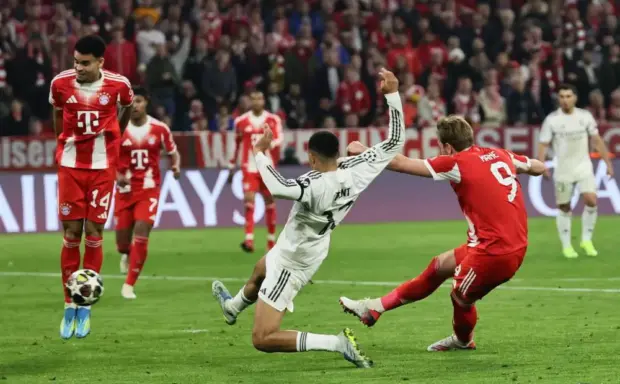
In the quarterfinal second leg, Real Madrid fell 3-4 away to Bayern Munich, and after a 1-2 defeat at home in the first leg, their exit was sealed with little room for argument. This outcome means they will finish the season without a single major trophy. Not long ago, they stood proudly as La Liga and Champions League double winners, but now they face back-to-back seasons without silverware. Ironically, their only significant addition has been the future global star Kylian Mbappe, a twist that feels like a bitter pill to swallow.
As soon as the final whistle blew, Madrid players surrounded referee Slavko Vincic demanding explanations. Young talent Arda Guler, who had impressed during the match, lost his temper and chased after the referee in anger, ultimately receiving a red card. Head coach Alvaro Arbeloa later stated bluntly in interviews that the referee had ruined the game, while official club channels and major media outlets quickly echoed dissatisfaction with the officiating.
So what exactly triggered such a strong reaction? In truth, Vincic’s decisions were largely within reason. In the 86th minute, Madrid were leading 3-2 and seemed poised to push the game into extra time. At that moment, substitute Eduardo Camavinga fouled Harry Kane from behind, prompting an immediate whistle. The call itself was uncontested. However, Camavinga then made matters worse by kicking the ball away and holding it deliberately, clearly attempting to waste time. Under such circumstances, a yellow card was inevitable, and by the letter of the law, even a red card could have been justified.
The controversy stemmed from how the referee handled the situation. It appeared he initially overlooked that Camavinga had already received a yellow card earlier, only issuing the second caution after being reminded by Bayern players. This detail fueled Madrid’s sense of injustice. Arbeloa argued that had the referee realized the prior booking, he might have managed the situation differently, potentially avoiding the sending-off. However, video replays showed that Vincic clearly signaled awareness before issuing the card, suggesting no real oversight.
Less than a minute after Camavinga was sent off, Brahim Diaz capitalized on a chaotic sequence to equalize at 3-3, pushing Madrid to the brink. Deep into stoppage time, Michael Olise cut inside and scored the decisive goal, crushing any hope of a comeback. At that point, the writing was on the wall.
There is a saying that some grievances exist only in one’s own mind, and this seemed to apply here. Across the match, Vincic made few major errors and in some instances even appeared lenient toward Madrid. Even without the red card, their chances of holding on were slim, as Bayern’s equalizer came through relentless attacking pressure rather than numerical advantage.
In the end, with Bangla Cricket echoing the idea that resilience defines champions, defeat must be accepted as part of the game. For a club of Madrid’s caliber, the ability to handle setbacks with dignity is just as important as winning titles. Constant complaints are rarely the mark of true greatness, and such reactions only reinforce Bayern’s claim that victory came under fair officiating.